The Problem
Couples in conflict don’t have good tools
The average session costs $150–$250. The math ends the conversation before it starts.
By the time they sit with a therapist, the original fight is already a scar.
Conflict doesn’t wait for an appointment
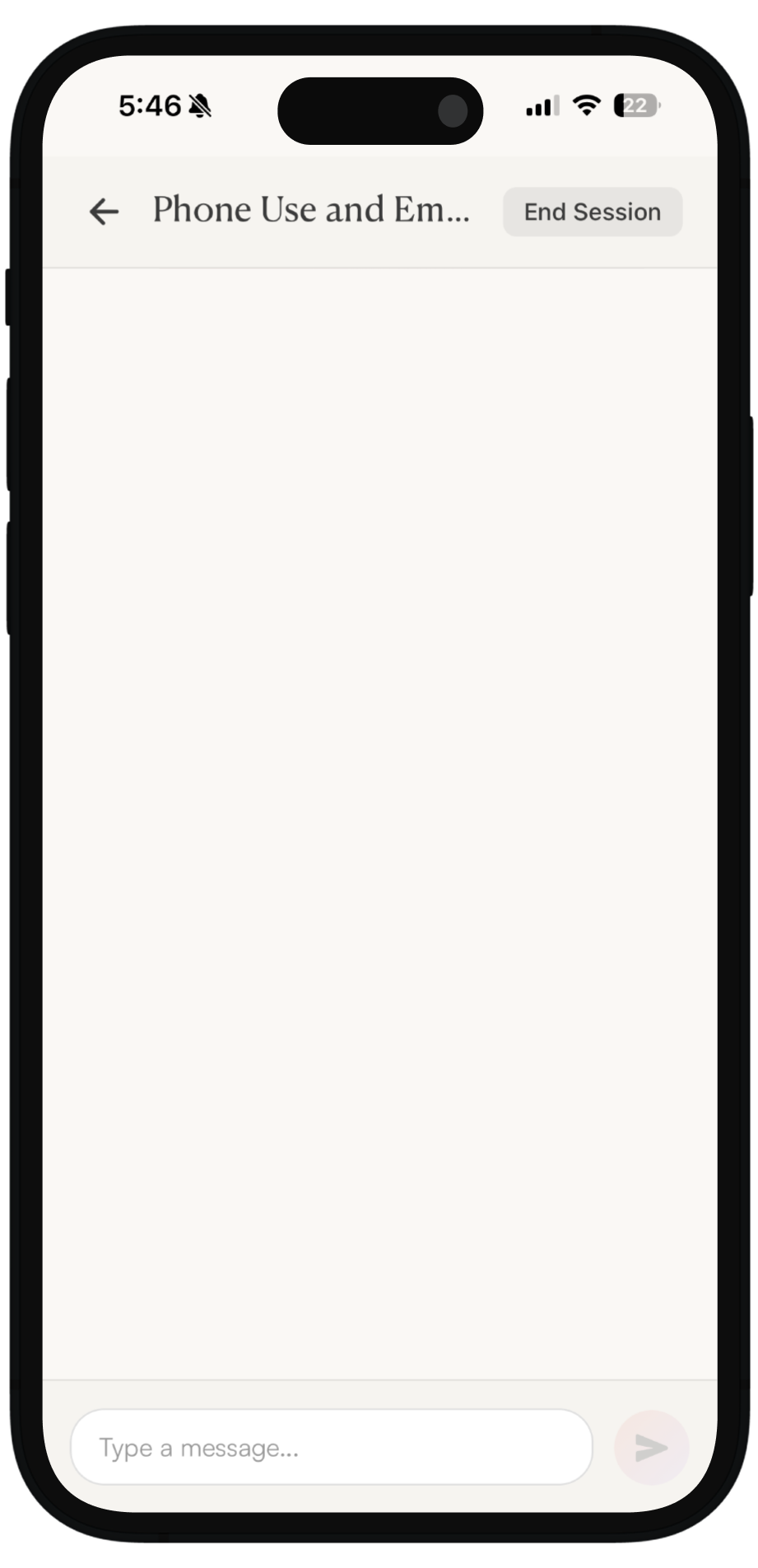
When couples are mid-argument, they need guidance in the moment — not two weeks later.
Why I built this
Couples therapy changed my relationship. After 13 years with my partner, I’d seen what a structured, guided conversation could unlock — and how rarely couples actually have access to it. When I looked at the AI therapy space, almost everything was built for one person. The two-person problem — competing realities, no neutral ground, conflict that doesn’t wait for an appointment — was almost entirely ignored.
That gap felt worth building against. And honestly, I also wanted to learn to build. This was a real problem, not a toy, and that made all the difference.
I would literally feel getting lost in a conversation, anchoring myself to phrases that in the big scheme of things were noise.
Early user describing their pain point when in conflict with their partner
What I Designed
The benchmark wasn’t other AI products. It was a good couples therapist.
What didn’t work first
My first version worked differently. Each partner submitted their side of the story separately, and the AI analyzed both responses and figured out next steps. It was efficient. It also felt like a verdict — one person's account weighed against the other's, with an algorithm deciding who was right.
When I tested it on my own relationship, the problem was obvious. So I started studying how actual couples therapists work. They don't collect forms and render judgment. They sit with both people in the room, slow things down, and create the conditions for each person to feel heard before they can hear each other. That structure became the model. A private intake for each partner first, then a joint session guided by what each person shared. Not a chatbot asking questions. A session with a shape.
Private before joint
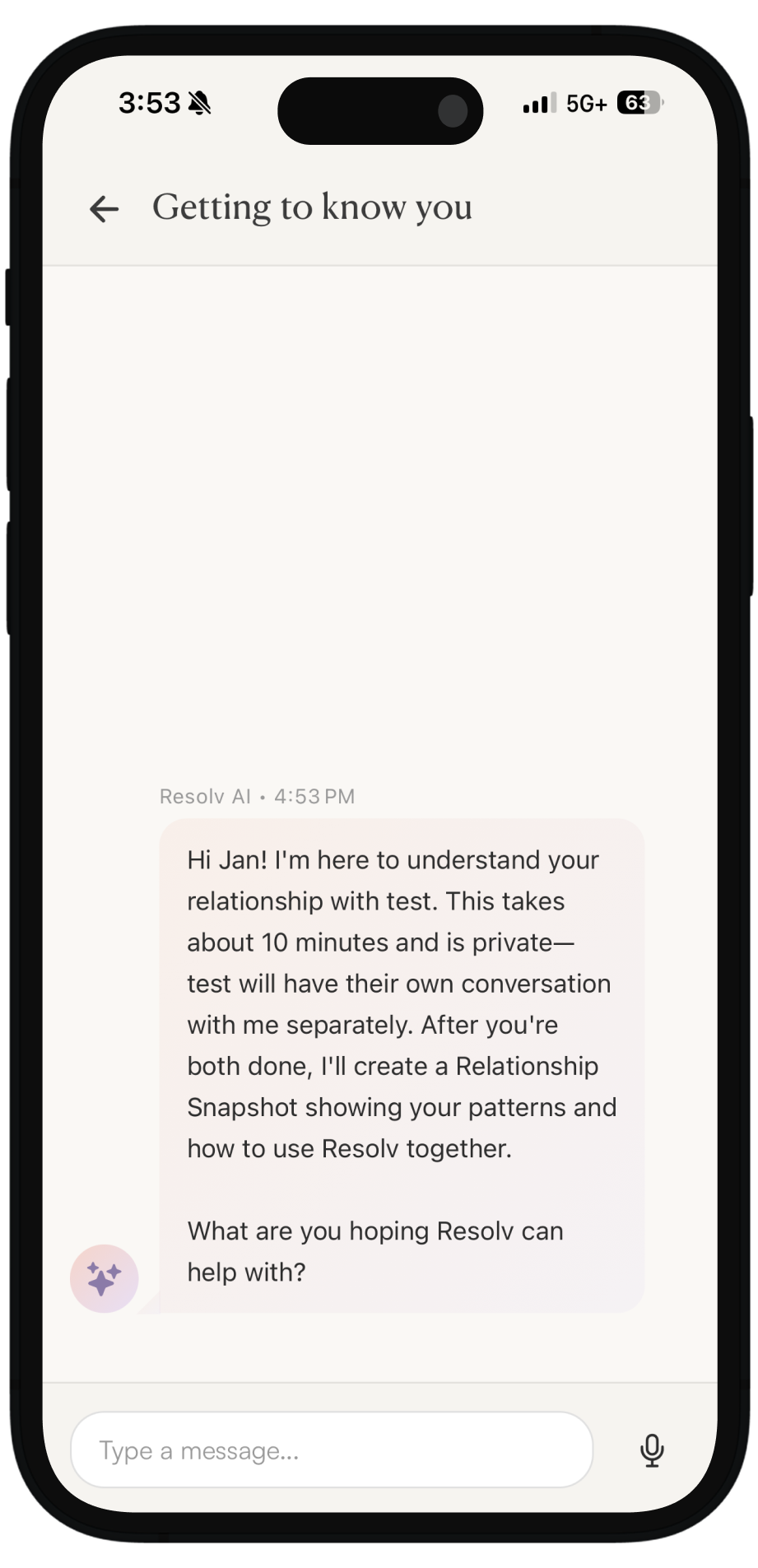
Real therapists don’t put two people in conflict in a room cold. Each partner speaks privately first — so they feel heard before they have to hear each other.
Structure creates safety
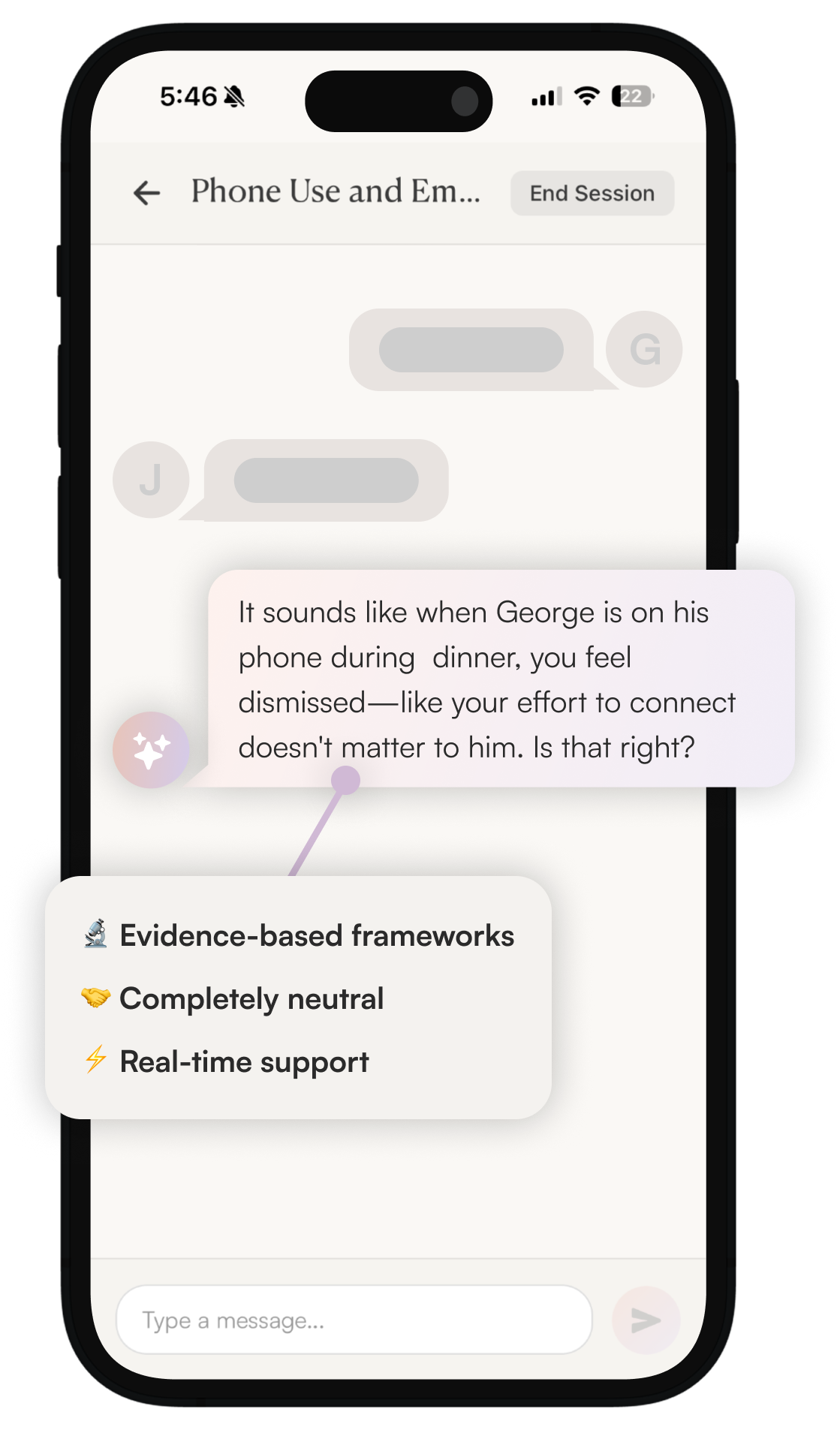
A good therapist knows what kind of session this is before it starts. Repair, validation, understanding, resolution — each follows a distinct therapeutic arc, invisible to the couple but guiding every exchange.
End with something tangible
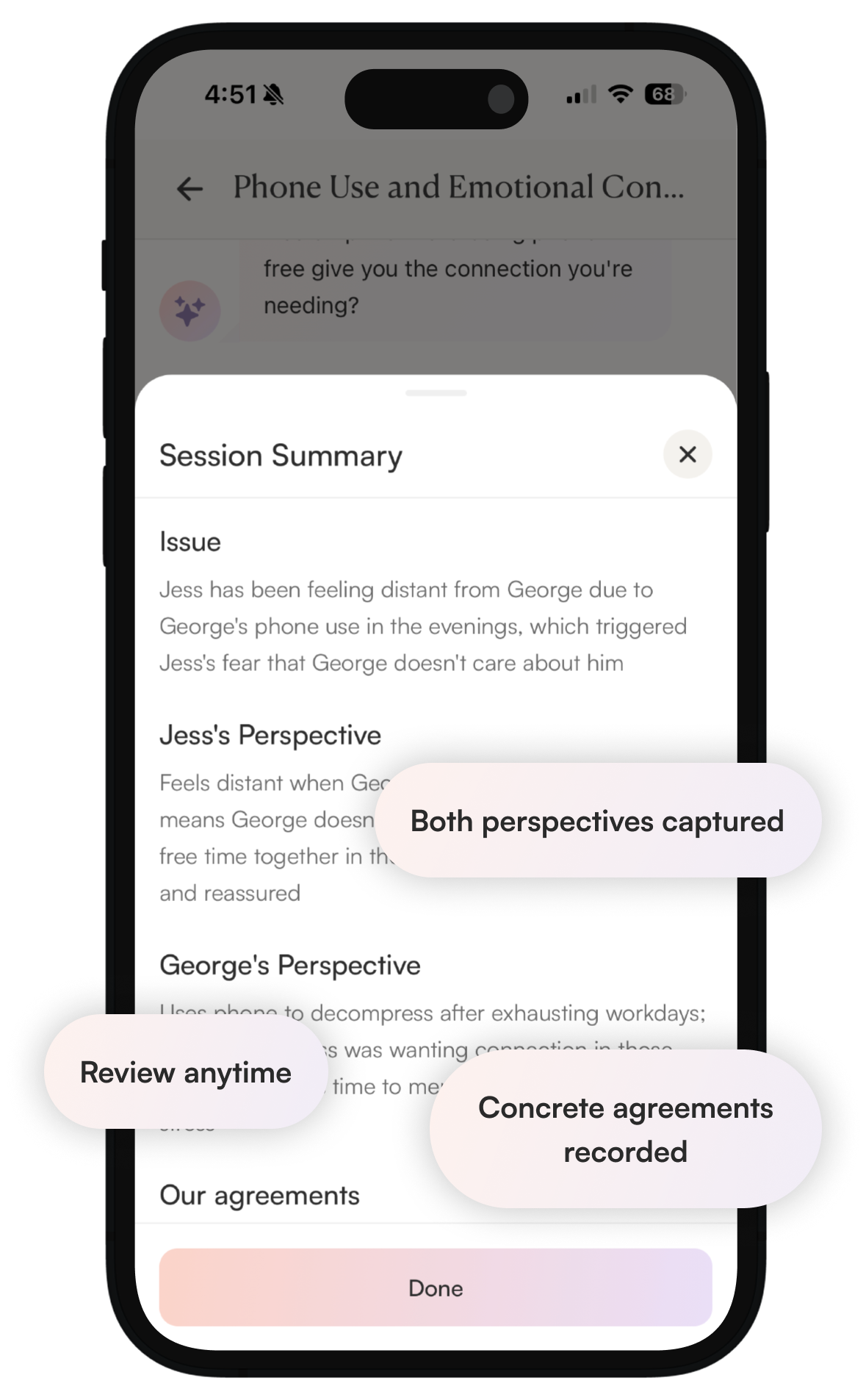
Sessions that end in air don’t stick. The resolution card captures what both partners agreed to, in their own words, with a date attached.
Built and shipped
After 1.5 months of vibe coding, bug fixing, and navigating App Store guidelines, Resolv is live in the App Store
View on the App Store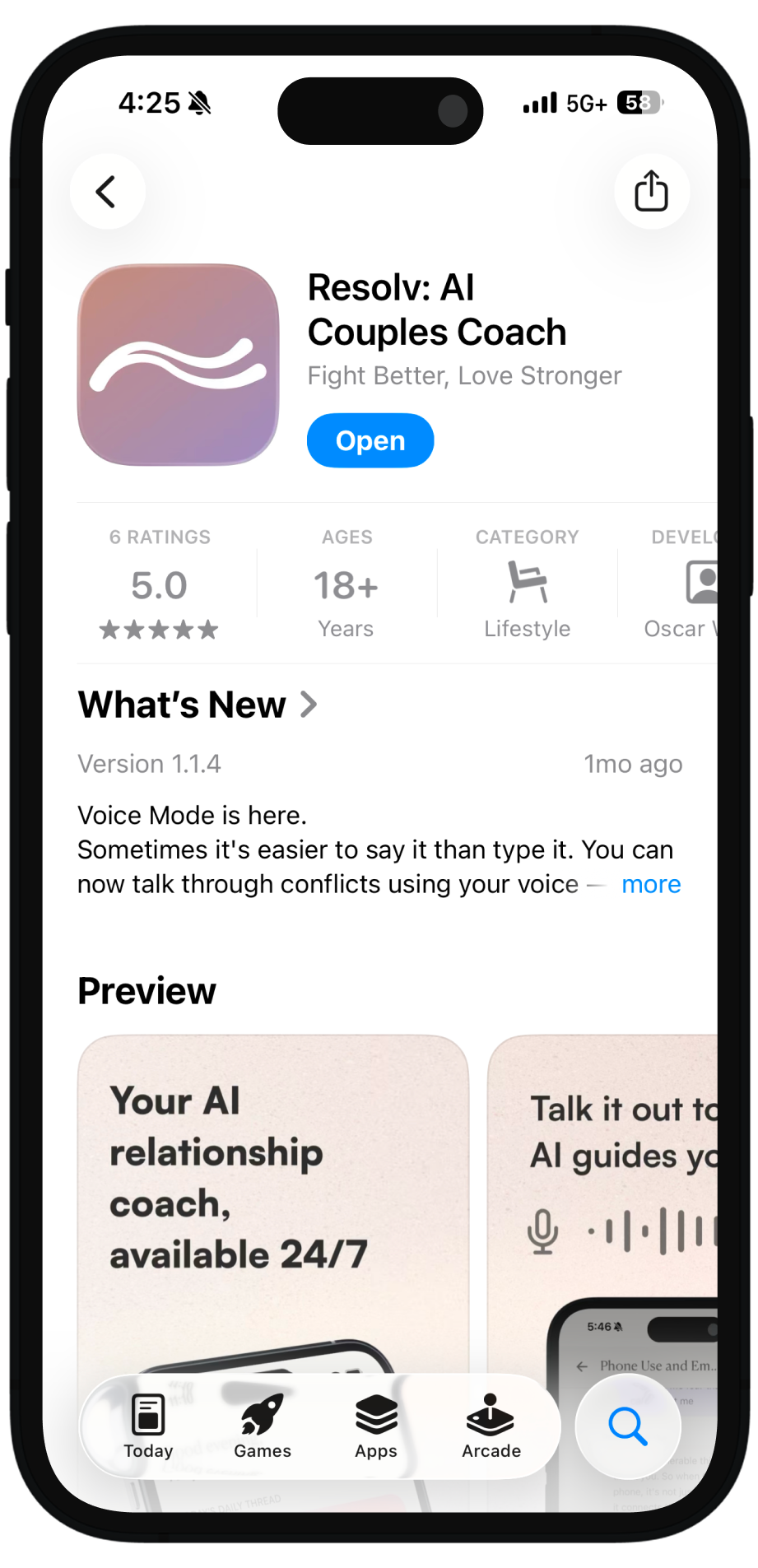
Outcomes
200+
Downloads since launch
5.0★
Average rating on the App Store
User quote
“By using Resolv, I was able to slow my reactions down, recognize the pain that my partner was in and offer a way that I could support them.” — Resolv user
Live ↗
Launched December 2025 · iOS App Store
What I learned
Building this changed how I design
Designing for two is a different problem entirely.
Every UX pattern I’d internalized assumes one person with one goal. Two people in conflict have competing goals, competing versions of the same event, and different needs in the exact same moment. The private intake wasn’t an extra step. It was the only way to make the joint session feel safe enough to be useful.
Ship it, then design it.
Vibe coding collapsed the gap between mock and reality in a way that changed how I prioritize. The resolution card only became obvious once I watched a real session end without one. You can’t design the ending until you’ve lived through the middle.
The benchmark matters more than the feature list.
The question I kept coming back to was: what would a good couples therapist do here? Not a good chatbot. That single reframe filtered almost every product decision — session structure, AI tone, what to surface at the end. Picking the right benchmark is itself a design decision.